“CAMMINO LUNGO IL PRECIPIZIO / CHE BARBARO IL TEVERE APRE TRA I DORMITORI / SORDIDI, E SPAGNOLESCHI QUARTIERI / DI TERRACOTTA.”
PIER PAOLO PASOLINI
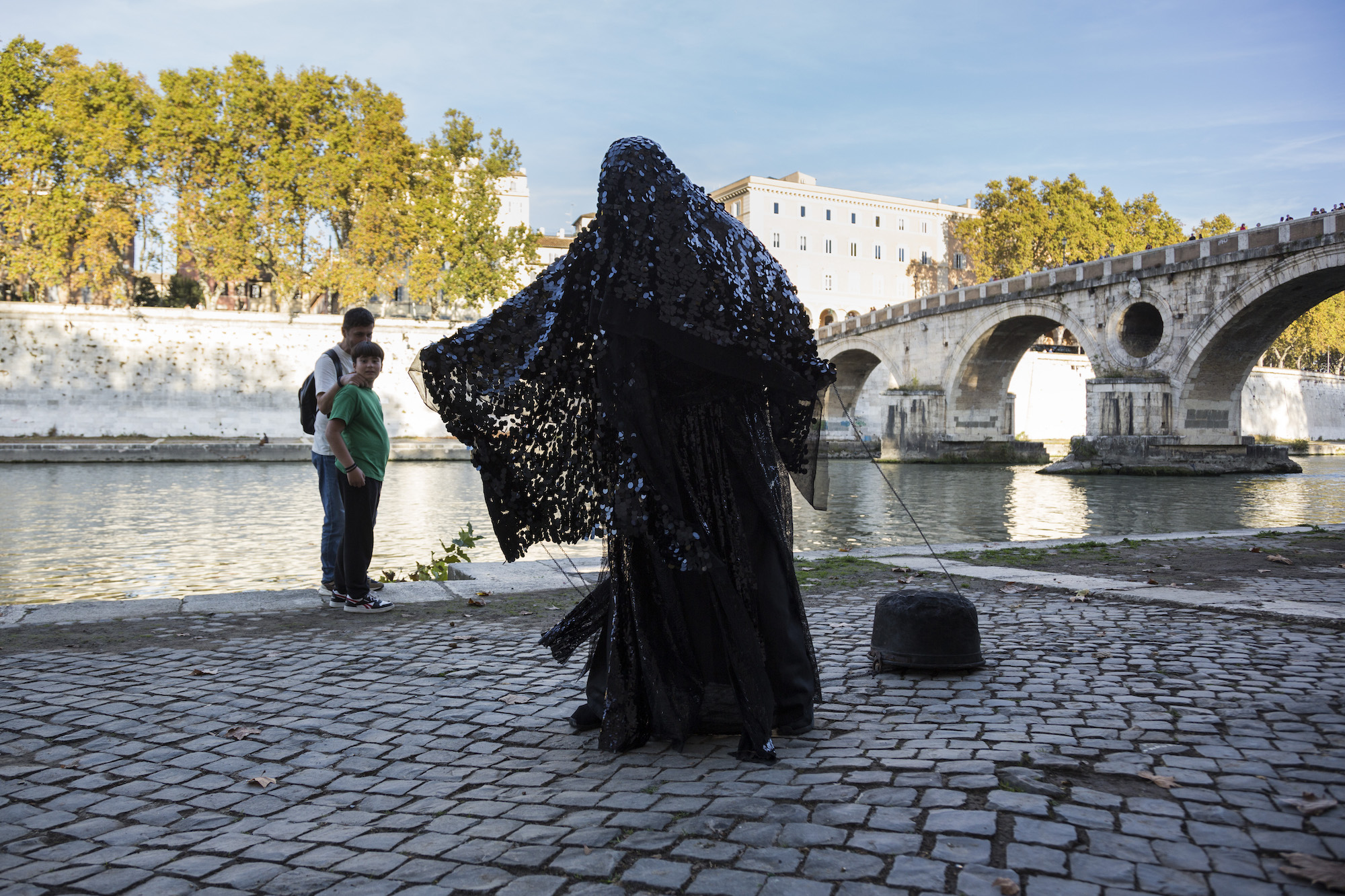
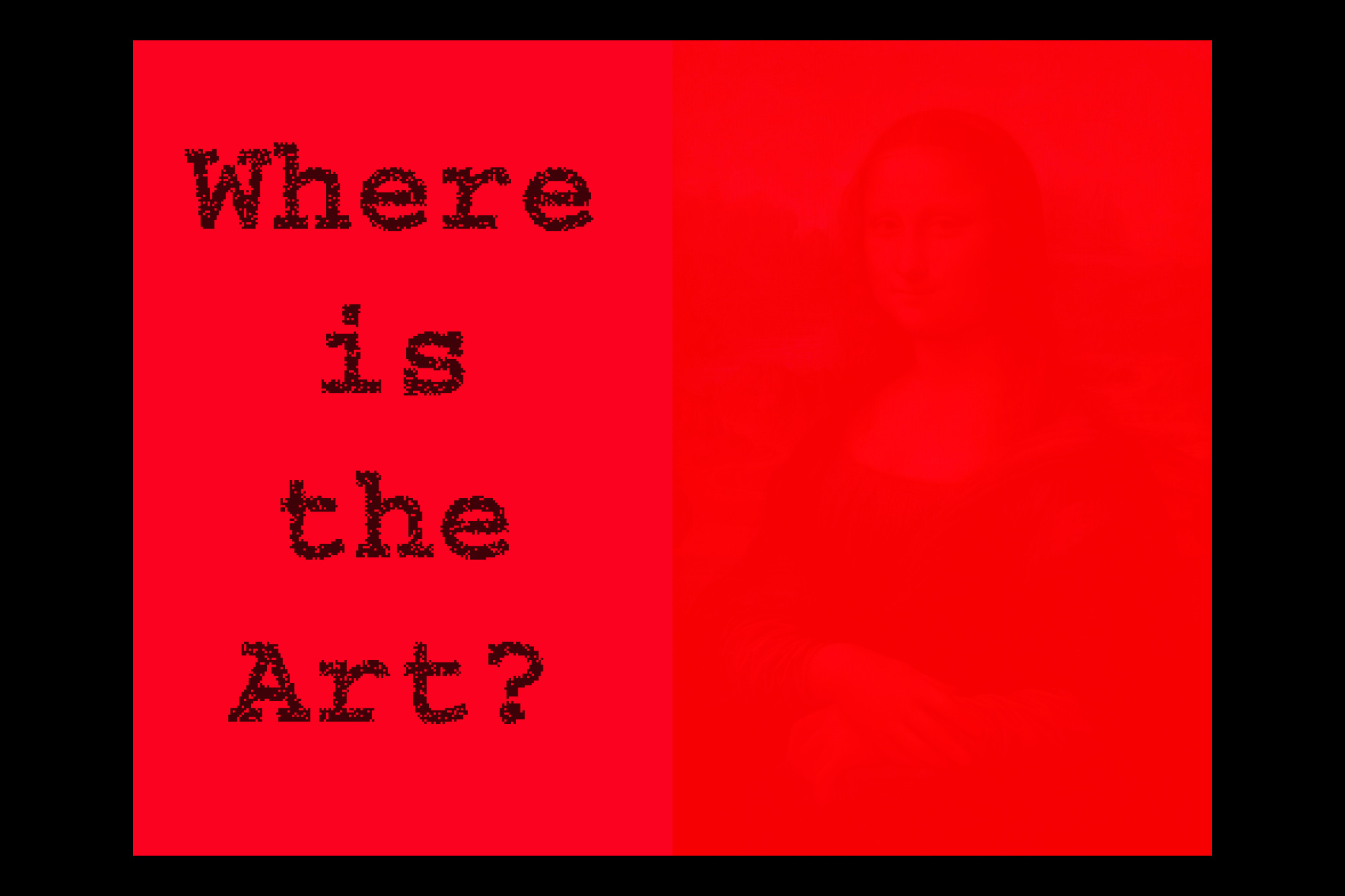
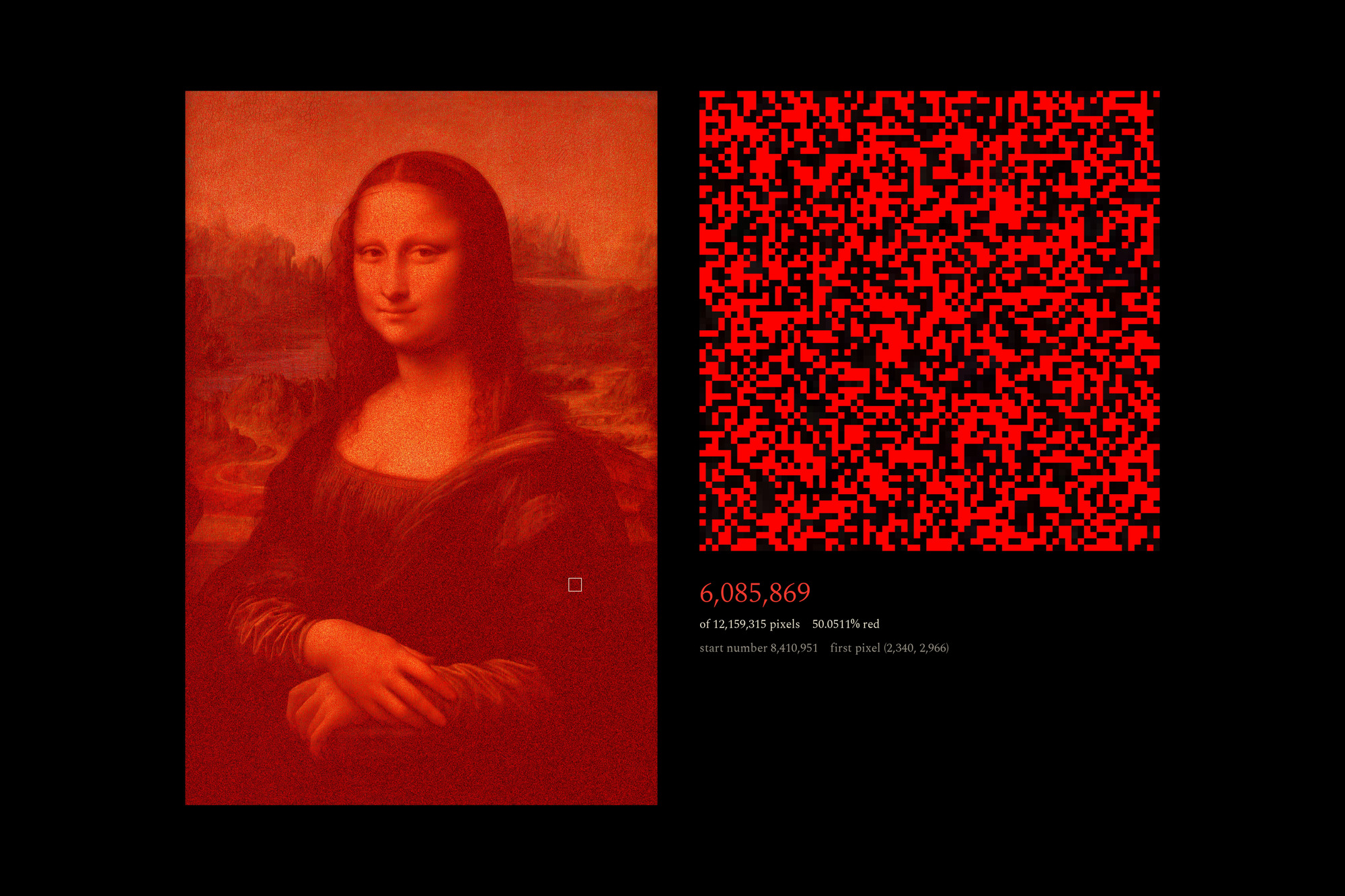




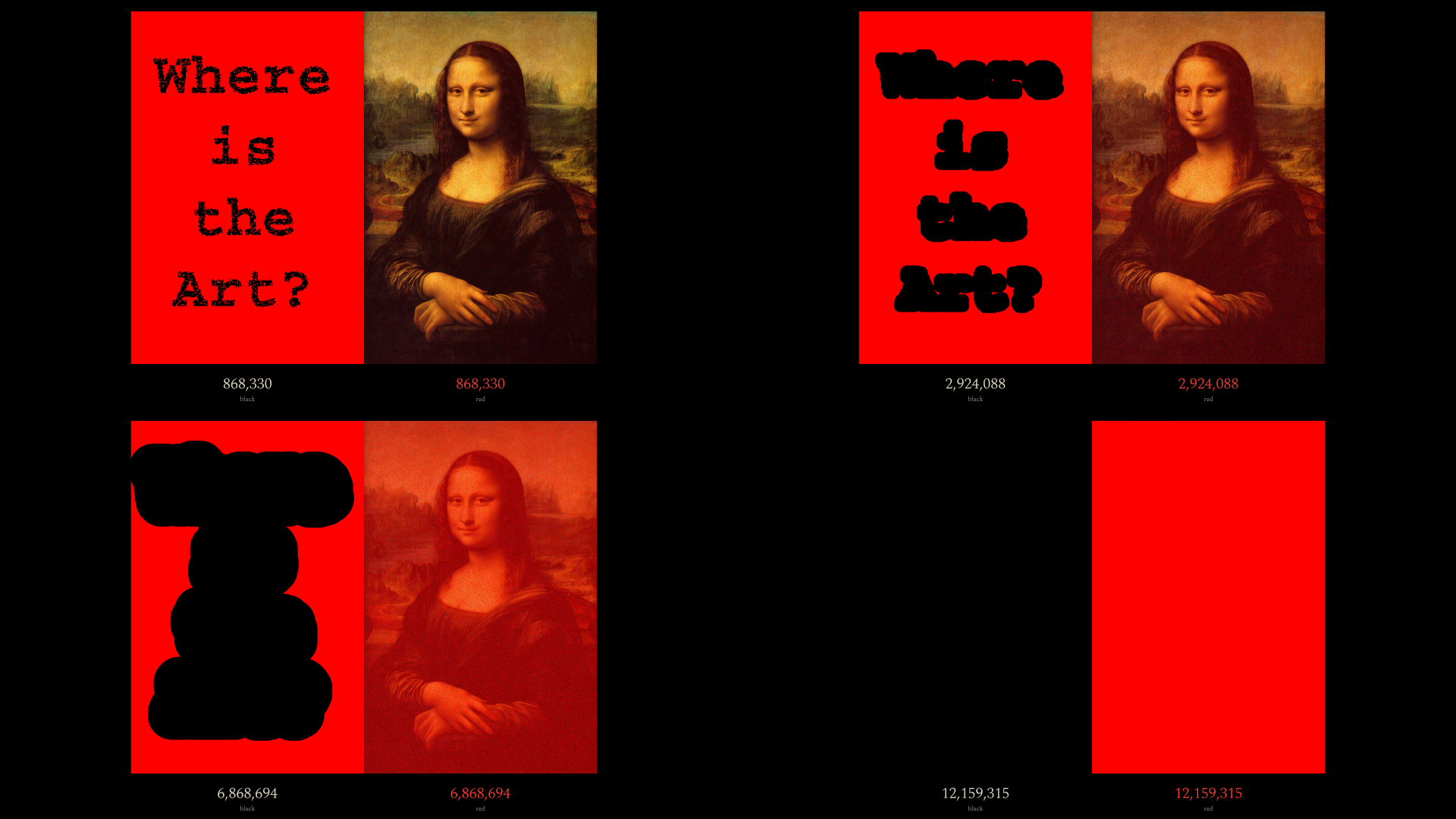







In Italian newspaper slang a coccodrillo is an obituary written in advance and kept in a drawer until its subject dies. In 1968 Pasolini wrote his own, in the third person. By his own account it was commissioned by an American magazine, Avantgarde, which never published it.[1] Seven years later he was killed. For the fiftieth anniversary of his death the Museo delle Periferie titled its programme Piangiamo Pasolini, “Let us weep for Pasolini.” Aceti answered with a crocodile.
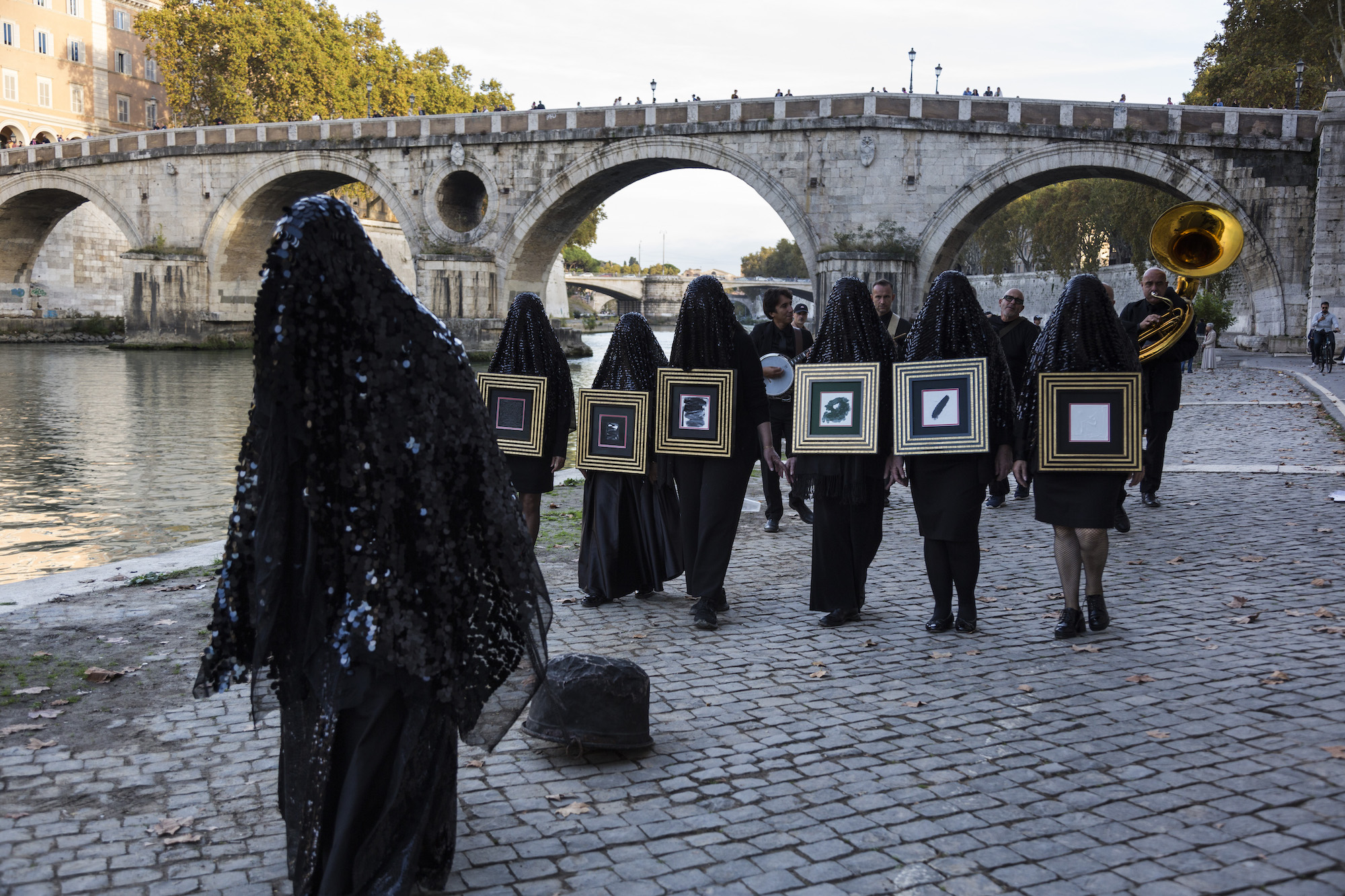
On the afternoon of 1 November 2025, fifty years after Pasolini’s last evening, a procession crossed Ponte Sisto, the bridge Sixtus IV built for the pilgrims of the Jubilee of 1475. It moved in four bands. At the front, a single figure in black, head covered, dragged a large metal cauldron on a chain. Behind it walked six women, veiled and in black, holding up six paintings the way icons are carried in procession. Then came six musicians in black and white, and then the public. One, six, six and the many: a cortège that runs from the black of mourning to the crowd that follows it. The sound came in layers too: the scrape and clatter of the cauldron, the brass, the ritual music, the song.
The cauldron is the first thing the eye meets. What it contains, Aceti has written, is everything and nothing. Everything includes the omissions and every “I would have, but I can’t.” It also holds the lost rustic religion of the Italic peoples and the artist’s own losses. Nothing is what is missing: what has gone, and the failure to stand up and speak.
The six women are the Great Black Mothers of the Mediterranean, returned as mourners. Their posture is the oldest form of public grief in the South, that of the prefiche, the paid mourners. Ernesto de Martino traced their lament from the ancient world to the lament of Mary, starting from the Lucanian funeral lament that still survived in his day. The Church had fought ritual weeping because, for it, death was only “un lungo sonno,” a long sleep.[2] The prefiche kept the passage between the visible and the invisible, between private grief and public rite. What is left to us is an impoverished edition of the lament.
The posture also belongs to Pasolini. In Il Vangelo secondo Matteo (1964), the elderly Mary who mourns Christ is played by his mother, Susanna.[3] She had already lost her other son, Guido, killed at Porzûs in February 1945.
The song, La Desolata del Coccodrillo, is eight stanzas Aceti wrote on the cadence of the prefiche. It opens in the posture of the Stabat Mater and then turns the mourners around:
Stavano donne mute, senza voce,
non più davanti al Figlio, ma al mostro del mondo
(Silent women stood, without voice,
no longer before the Son, but before the monster of the world)
Stanza by stanza the monster takes shape: a statue of light that does not shine, an open market of saints and the dead, a grief wandering the television studios, a paper angel holding it up under contract, a false flag that “returns every year with a black voice.” Between the stanzas comes the refrain:
Ogni lacrima pesa, / la processione avanza, / e il pianto risuona.
(Every tear weighs, / the procession advances, / and the weeping resounds.)
The last line names who is weeping: il Coccodrillo del mondo, seduto a lacrimare, the Crocodile of the world, sitting there, shedding tears.
Behind the women, the six musicians fused the brass of a New Orleans funeral with the ritual music of Medea, the film whose rites of Colchis Pasolini set to Tibetan and Ethiopian recordings chosen with Elsa Morante.[4] In New Orleans the crowd that walks behind the band has a name: the second line. On Ponte Sisto the second line was the public of a commemoration, and the title has already said who that is.
The crocodile has wept over its prey for a long time. In the Worksop Bestiary, made in England around 1185, it devours a corpse and then weeps over it, as an image of hypocrisy.[5] For Aceti the crocodile is not an individual but a system: power dressed as truth, interference dressed as help, never investigated, always present. The title of the section takes one more step. Memories of a Crocodile is about not the crocodile but a crocodile: the politician and the citizen in a single silhouette, and whoever walks in the second line.
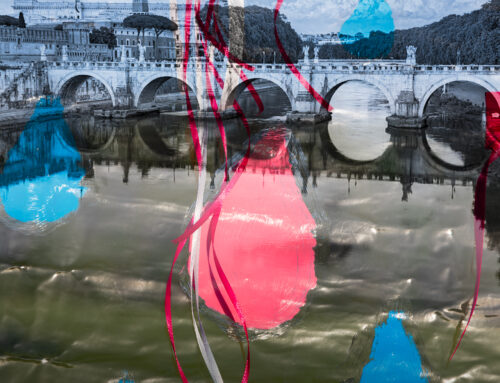
Under the bridge runs the river. The water that passed beneath the procession runs down to the sea, to the Idroscalo at the mouth of the Tiber, where Pasolini’s body was found on 2 November 1975. The night before, around eleven, he had made his last stop at Al Biondo Tevere, a trattoria on the Lungotevere San Paolo with a terrace over the river, where he was a regular.[6] Pasolini’s Rome begins and ends in this river. Ragazzi di vita opens with Riccetto diving into the Tiber to save a drowning swallow. It closes with Riccetto watching his cousin Genesio drown in the river, then running off before anyone can see him.[7] The rescuer of the first page is the witness who walks away on the last.
The Tiber also carries an older name. Before it was Tiberinus, named after a king who drowned in it, it was Albula: white, bright, feminine. Amisit verum vetus Albula nomen, writes Virgil: Albula lost its true, ancient name.[8] A goddess was renamed after a drowned man, and the renaming was an act of possession. This is the river the crocodile rises from, half-submerged, carrying the silt of millennia. In this river history is not past but sediment, still flowing, still poisonous, still alive.
The false flag that returns every year is the anniversary itself, and the performance does not pretend to stand outside it. It took place inside an official programme of mourning, in the centre of Rome, and its last half hour was set aside for photographs and video. Athens had already drawn a line around mourning. Solon, Plutarch records, banned “the use of set lamentations” and “the bewailing of any one at the funeral ceremonies of another.”[9] La Desolata is both: a composed lament, sung at another man’s commemoration. A public lament can be silence, however loud, even with a band playing. Mourning is time withheld from consumption, so it gets either privatised or turned into spectacle, and mourning that changes nothing is hypocrisy. The procession answers with two questions: who has the right to mourn, and why do we honour only those we first pushed aside?
When he was killed, Pasolini was writing Petrolio, a novel about the death of Enrico Mattei, oil and the powers behind both. It was published unfinished, seventeen years later, and its Appunto 21, “Lampi sull’ENI,” is presumed missing.[10]
The water that passed under Ponte Sisto that afternoon was on its way to the sea. For centuries the Tiber has taken in voices, curses, hymns and laments. The procession was dedicated to the dead, to the things that are gone, to everything we know will not return, while new and murky horizons open.
Ad Memoriam Futuram Ioannis Iosephi Francescutti
Notes
[1] Maira Martini, in Ulisse, n.s., special issue 1 (2024), Pasolini e il suo mito, ed. Francesco Ottonello, n. 35; Naomi Greene, Pier Paolo Pasolini: Cinema as Heresy (Princeton: Princeton University Press, 1990).
[2] Ernesto de Martino, Morte e pianto rituale nel mondo antico. Dal lamento pagano al pianto di Maria (Torino: Einaudi, 1958).
[3] Piero Stefani, “Secondo Matteo,” Il Regno – attualità 4 (2022): 132–133.
[4] Roberto Calabretto, “Le musiche di tradizione orale nella trilogia classica di Pasolini,” Antropologia e Teatro 17 (2024): 15–37.
[5] Worksop Bestiary, England, c. 1185. New York, Morgan Library & Museum, MS M.81.
[6] Rocco Carbone, “Al Biondo Tevere, ultima fermata,” la Repubblica, Rome edition, September 2007; reproduced by the Centro Studi Pier Paolo Pasolini, Casarsa della Delizia.
[7] Pier Paolo Pasolini, Ragazzi di vita (Milano: Garzanti, 1955).
[8] Virgil, Aeneid VIII, 332.
[9] Plutarch, Solon 21, trans. Bernadotte Perrin, Plutarch’s Lives, vol. I (Cambridge, MA: Harvard University Press, 1914).
[10] Pier Paolo Pasolini, Petrolio, ed. Maria Careri and Graziella Chiarcossi, under the supervision of Aurelio Roncaglia (Torino: Einaudi, 1992).
Image Captions:
Image 1: Lanfranco Aceti,
Image 2: Lanfranco Aceti,
Image 3: Lanfranco Aceti,
Image 4: Lanfranco Aceti,