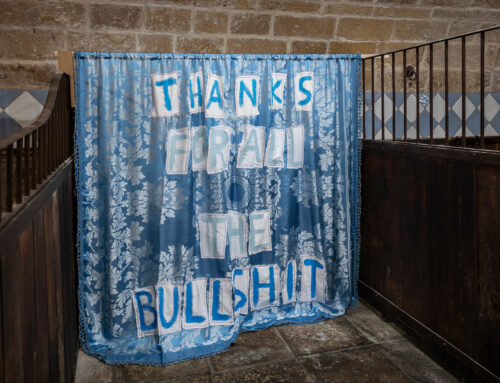
“IT IS A BEAUTY WROUGHT OUT FROM WITHIN UPON THE FLESH, THE DEPOSIT, LITTLE CELL BY LITTLE CELL, OF STRANGE THOUGHTS AND FANTASTIC REVERIES AND EXQUISITE PASSIONS.”
WALTER PATER
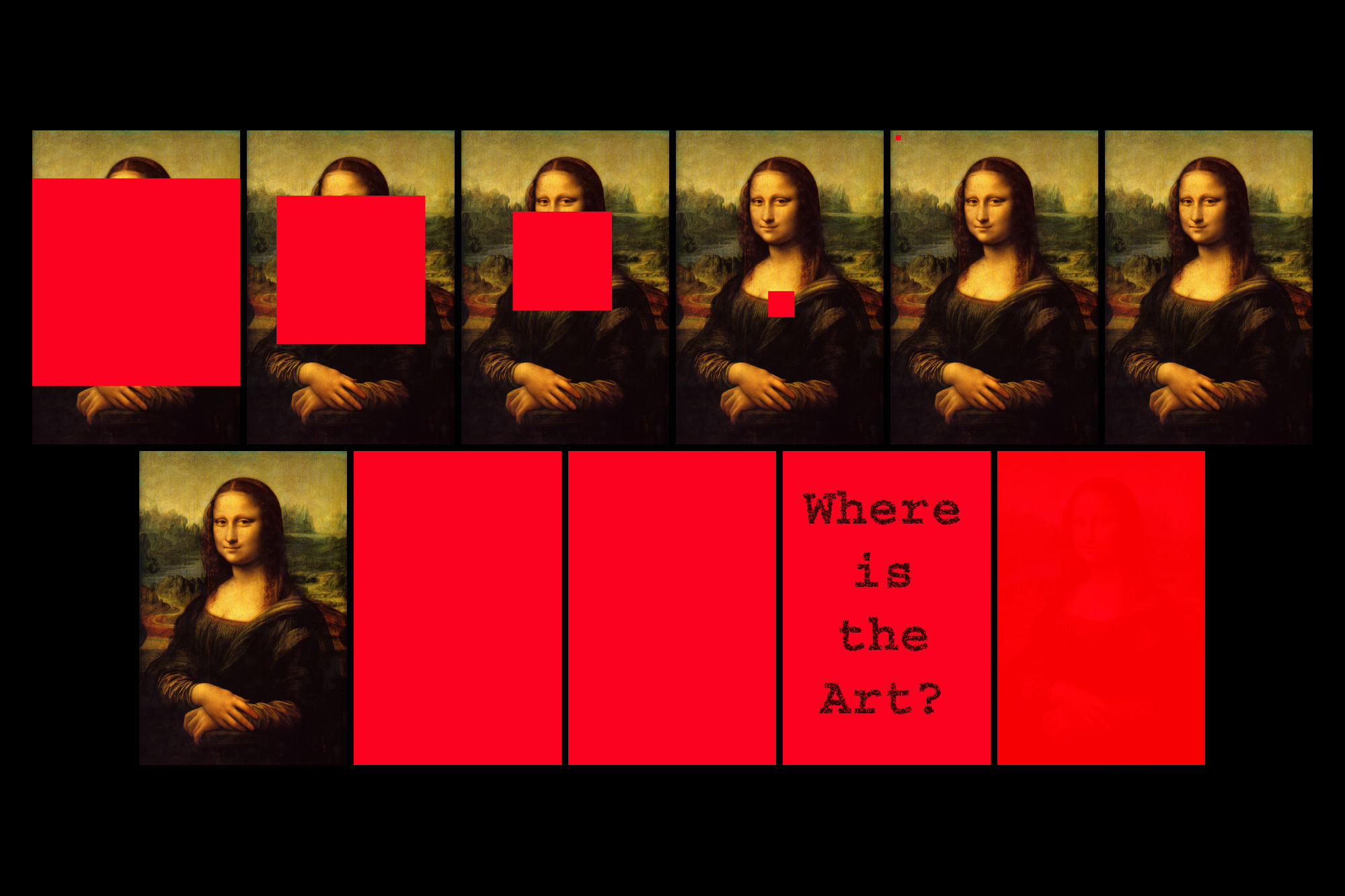
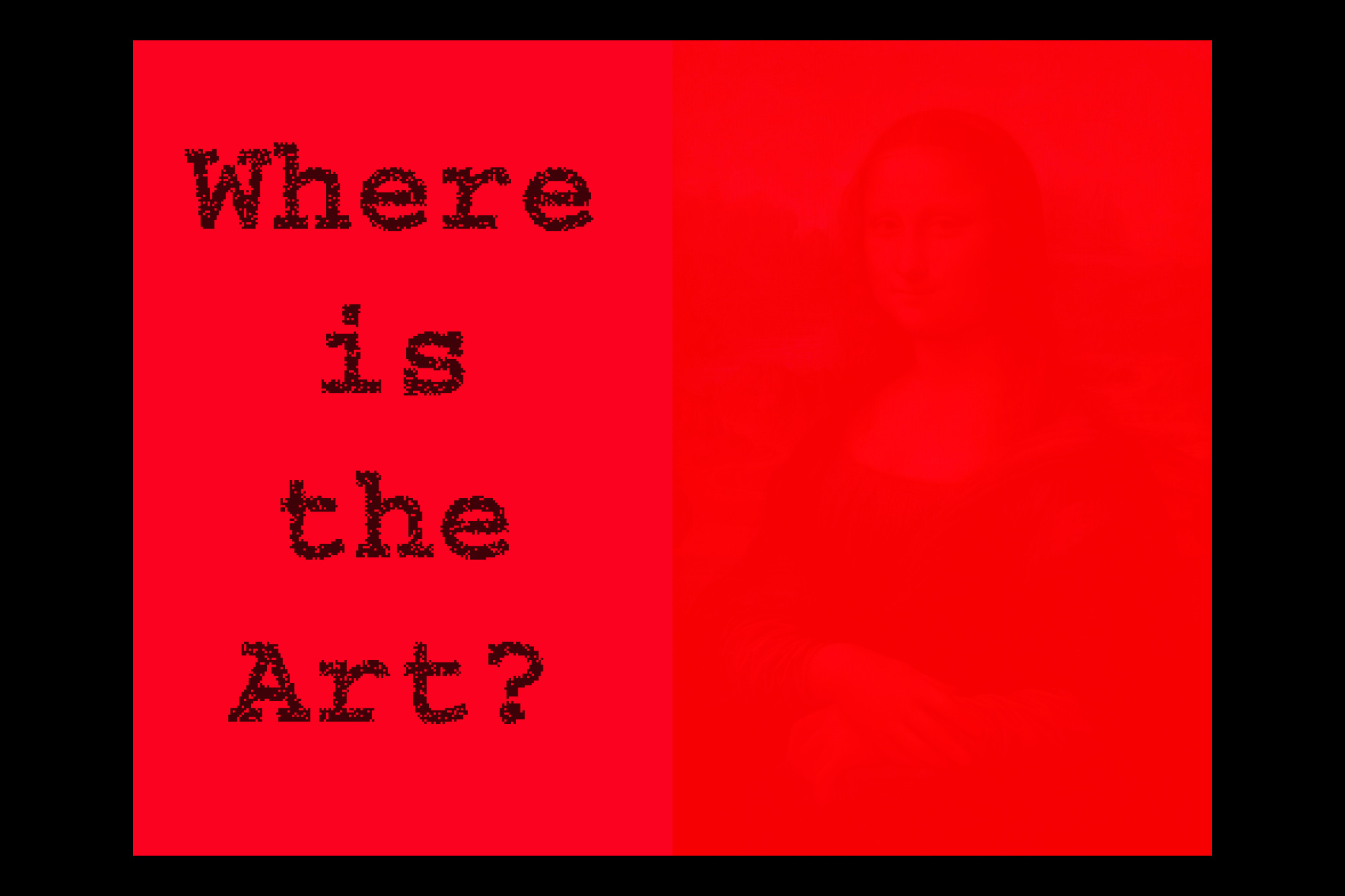
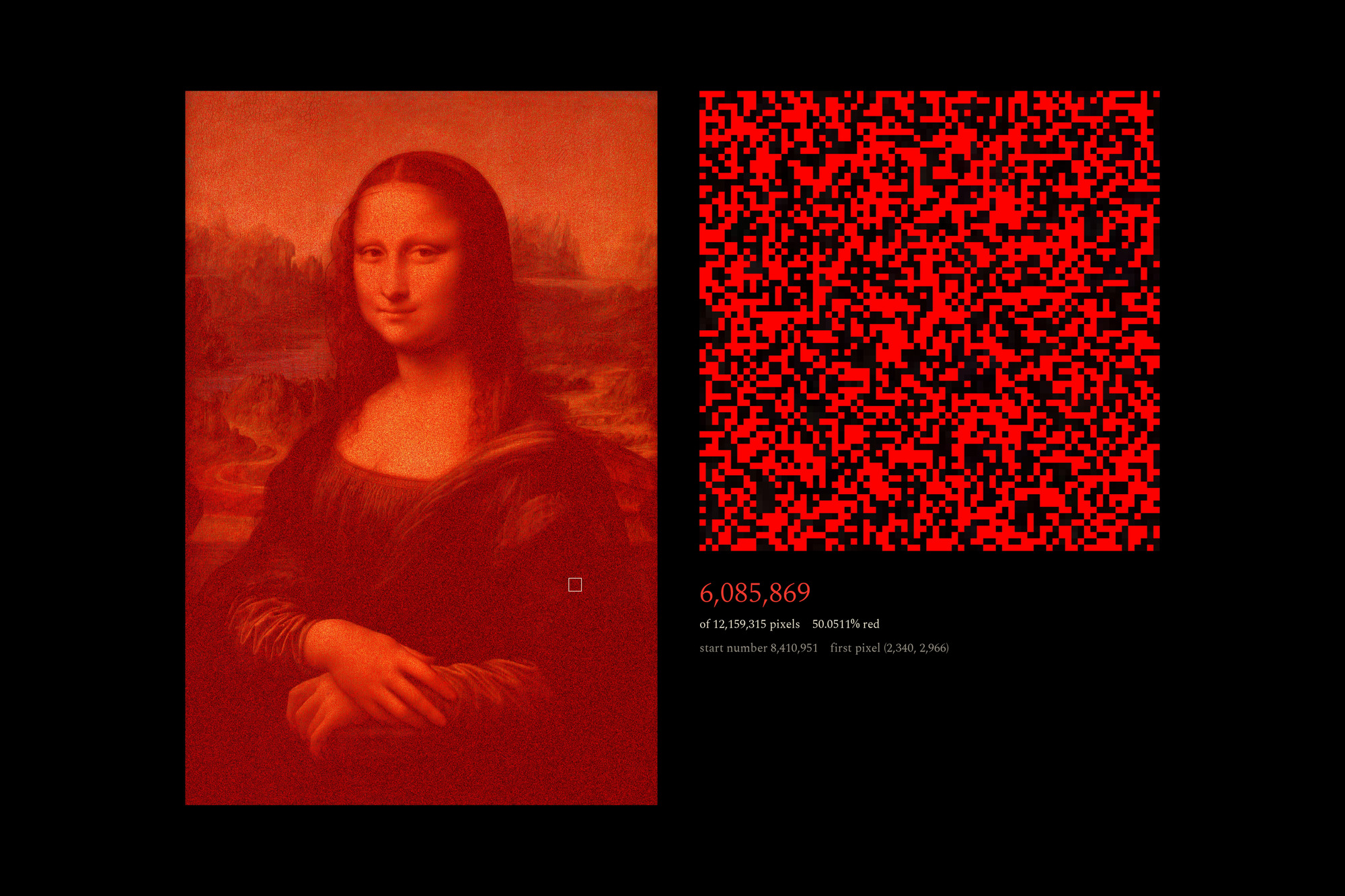
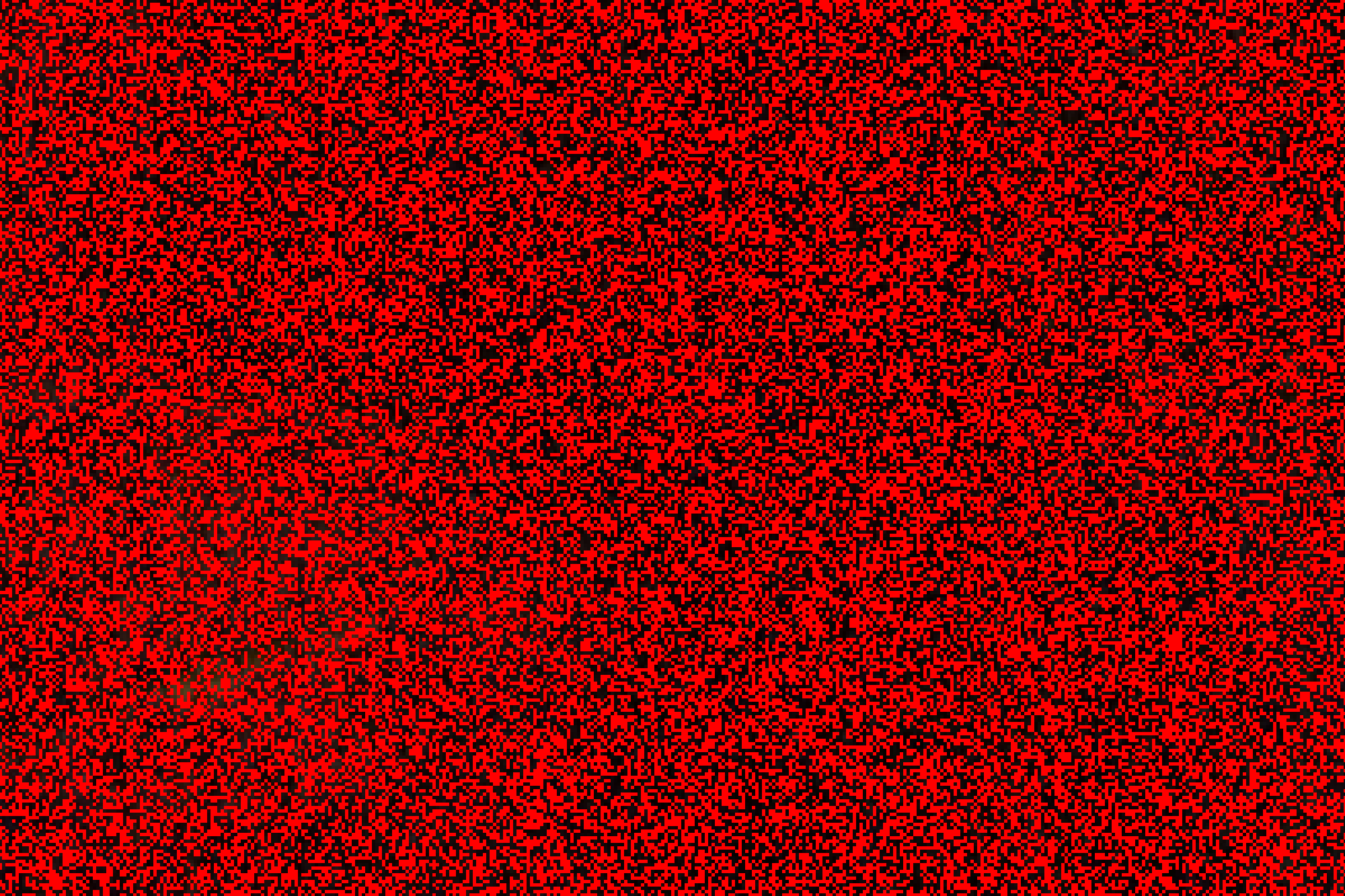
In 2000, Lanfranco Aceti placed a single red pixel on the Mona Lisa and asked where the art was. Dov’È la Mona? aka Modus Pixellandi: Where is the Art? was a sequence of stills. The pixel contracts from a visible intervention to a minimal trace until it disappears entirely beside an unaltered image; then it expands until nothing of the painting can be seen. Running the process pixel by pixel would have required engineers, equipment and funding beyond the reach of an individual artist, so the proposition waited twenty-six years. In 2026 it took four days.
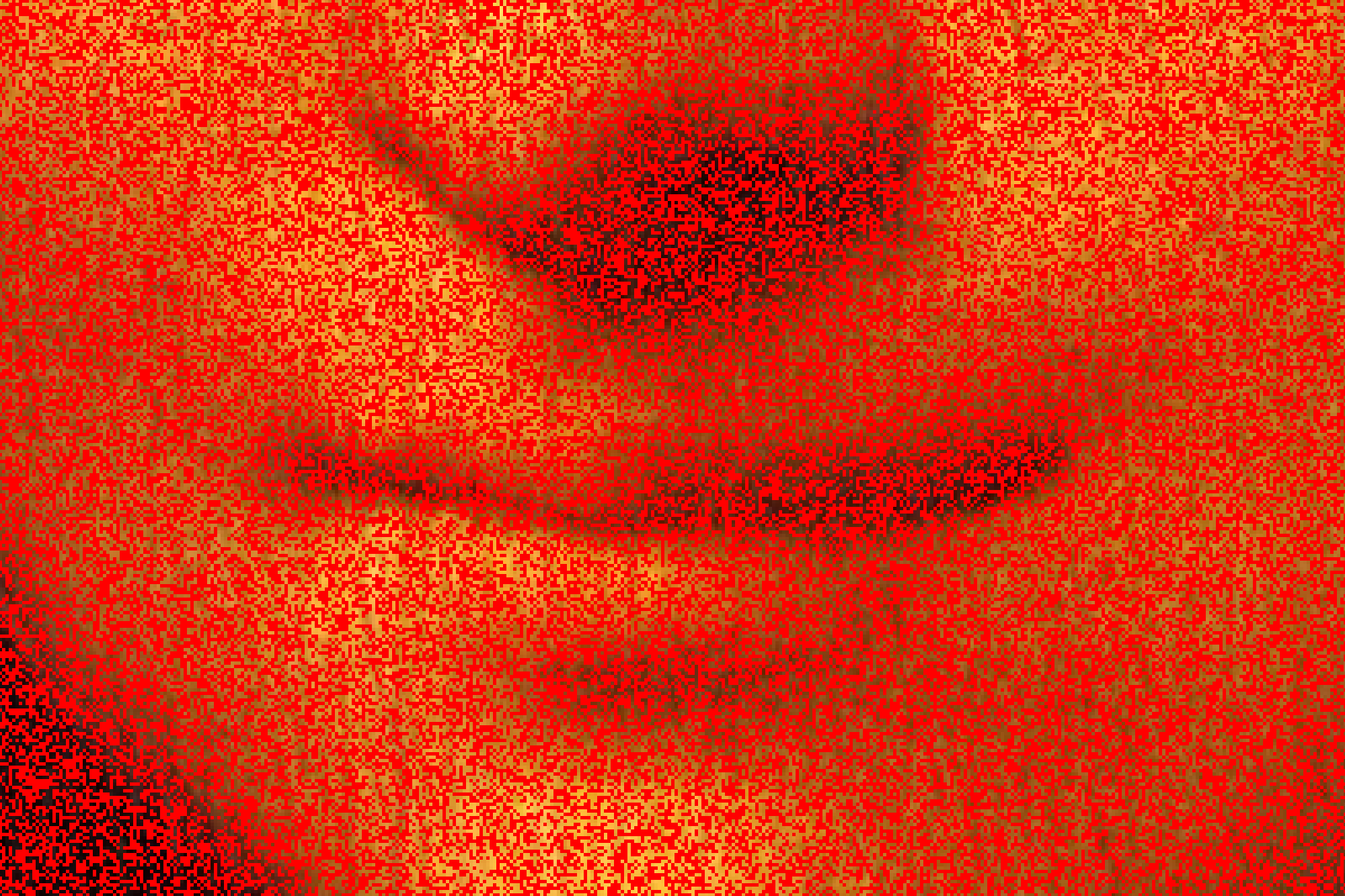
Red Takeover (2000–2026) is that proposition carried out. A single number between 1 and 12,159,315, the pixel count of a reproduction of the painting, fixes the order in which every pixel turns red. In a single-channel 4K video of sixty-six seconds, played on a loop, one red pixel becomes two, then three, then millions, until the Mona Lisa is covered. For the first thirty seconds of the takeover she seems untouched: the change is already there, at the scale of a single pixel, before anyone can see it. The work was shown in AND PRAXIS at the NEWART Centre, Reus, in October 2026.
No artwork has been remade, reinterpreted and refashioned more often. Her status rests less on aesthetic value than on narratives, often conflicting, in which she is at once subject and object of observation. In that vacuum aesthetic and myth form an open matrix of meanings, factual, interpretative, or delirious, and she becomes a hypoiconic im/lin sign, living between and beyond visual, literary and popular culture.
So where does the artistic gesture reside? Must it be visible to exist? Once the image is hidden, does it keep any affect? How much of it must remain to sustain its presence, or is presence itself a projection?
The work sits on the threshold of what is defined as phenomenon X, where something that is A mutates into something that is B (Pasolini, Deleuze, Guattari). The same threshold runs through a person and through a state. How much can be removed from a human being before what remains is a synthetic entity, an AI version of itself? How much can a democracy erode before only its representational shell is left, an image of democracy concealing an entirely different reality? What persists then is a phantasm, an εἴδωλον (eídōlon).
The stills of the work are taken at a single instant: the moment the red first holds the majority, 6,079,658 of 12,159,315 pixels.
Ad Memoriam: Malcolm Le Grice (1940–2024)
We had many conversations on the topic while at Central Saint Martins. In the late 1960s he had set up the film department at Saint Martin’s, and he had been making computer works since the middle of that decade. In 2001 he collected his essays in Experimental Cinema in the Digital Age. He died in December 2024, between the first version of this work and the second.
Image Captions:
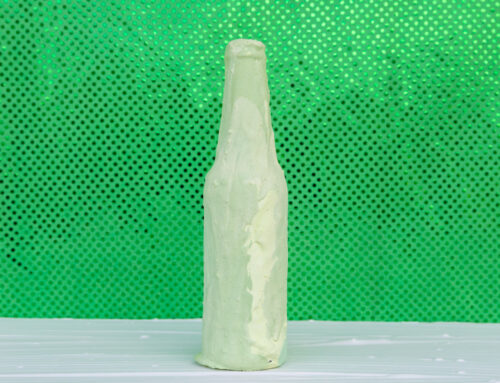
Image 1: Lanfranco Aceti,
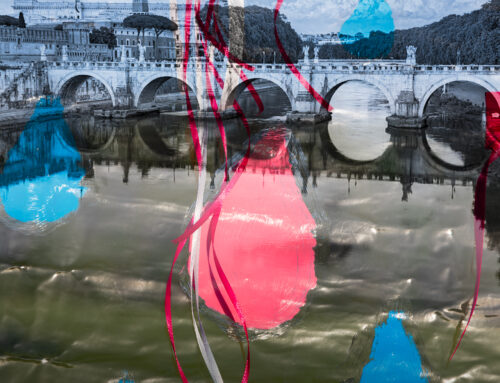
Image 2: Lanfranco Aceti,
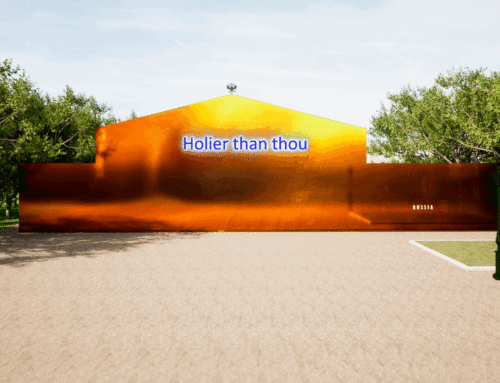
Image 3: Lanfranco Aceti,
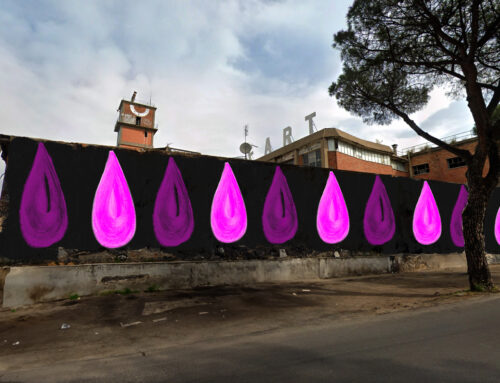
Image 4: Lanfranco Aceti,