News

JURISDICTION SHOPPING

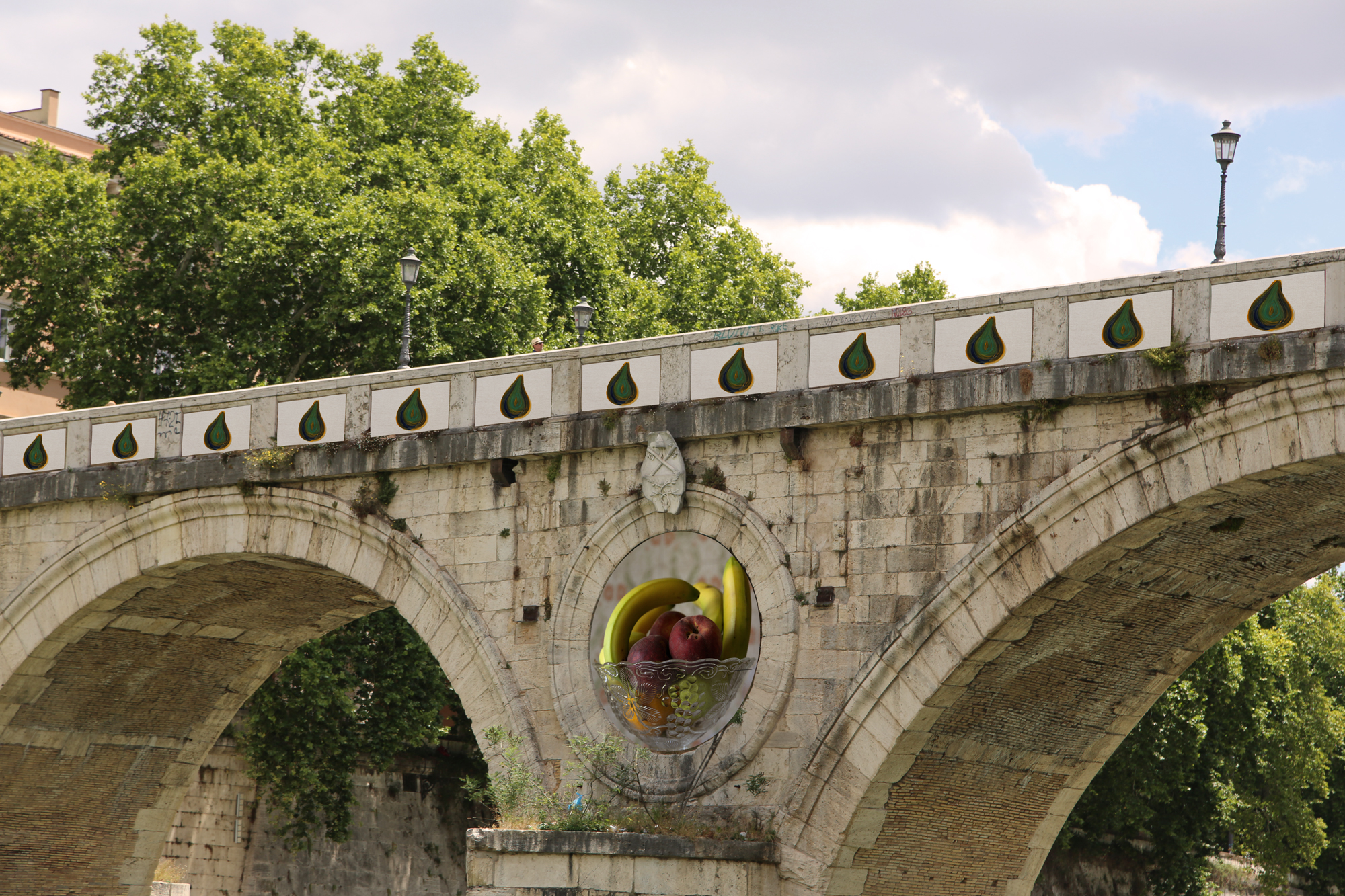
Jurisdiction Shopping by Paolo Cirio Senior Curator: Lanfranco Aceti Associate Curator: Vince Dziekan Curators: Ozden Sahin and Jonathan Munro

“As a general rule, it is taxation that monetarizes the economy; it is taxation that creates money, and it necessarily creates it in motion, in circulation, with turnover, and also in a correspondence with services and goods in the current of that circulation.”

Paolo Cirio’s Jurisdiction Shopping is an exhibition that focuses on the current schizophrenic post-postmodern relationships between state, corporations and citizens. The personification of corporations and their increasingly transnational nature has produced a new set of relationships that have excluded and exempted some people from participation in the shared onus (responsibility) towards the state. At the same time, these privileged few continue operating illegally within the state; living, abusing and corrupting through financial malpractices the very society within which they live.

Cirio’s work democratizes this process of escaping from one’s obligations towards the state by allowing a liberalized and widespread participation in the process of tax evasion – no longer a privilege of the ‘rich few.’

Jurisdiction Shopping offers the viewer the possibility of engaging with a series of artworks that are based on the artist’s experience of attempting to generalize practices of illegality, therefore, presenting the possibility of a world within which exist frameworks for a generalized tax evasion.

This is a period in which social injustice, illegal market and financial behaviors, corporate malfeasance as well as multiple obscure and hidden charges have become a form of private taxation and vexation parallel to the public taxations and vexations of corrupt states. These are phenomena that are contributing to the […]

A POUND OF FLESH

A POUND OF FLESH by Lanfranco Aceti sponsored by NeMe, Cyprus When: Thursday May 23, 2013, from 10:30 to 12:30 Where: Limassol Municipal Market, Kanari st, Limassol Curated by: Helene Black, Ozden Sahin and Jonathan Munro Coordinated by: Yiannis Colakides

MoCC and NeMe present A Pound of Flesh, a series of interventions and new artworks by Lanfranco Aceti. The artworks, installations, performances, videos and photographs, focus on the current social crisis and question relationships of power and money.

“They are like painters who cover the walls of sinking ships with still lifes They produce their daubs undisturbed by the mighty or by the screams of the ravaged.” Adorno, Aesthetic Theory, 149-150.

A Pound of Flesh will see a performance taking place at the local market in Limassol in order to question the current European economic crisis and its social impact.

If the political abuse of the economically deprived of society is nothing else than a process of consumption and devouring, what is left for European citizens but to offer a pound of flesh?

To stay informed please subscribe to our newsletters: http://www.lanfrancoaceti.com/newsletters

TRIMMING THE ARTS

Trimming the Arts: Art Cuts and the Role of the Artist within Societies in Crisis by Lanfranco Aceti at Point Centre for Contemporary Art, Megaro Hadjisavva 2, Evagorou Avenue 1097, Nicosia, Cyprus Wednesday May 22, 2013, from 19:30 to 20:30

Introduction by: Andre Zivanari
Chaired by: Yiannis Colakides

The Museum of Contemporary Cuts, Kasa Gallery, NeMe and Point Center for Contemporary Art present a talk by Lanfranco Aceti “Trimming the Arts: Art Cuts and the Role of the Artist within Societies in Crisis.”

Taking as its starting point Pier Paolo Pasolini’s analysis of exploitation of labor and Jean Baudrillard’s idea of commodification Trimming the Arts examines the current metaphysical remnants of state, society and the citizen.

“Qu’ils mangent de la brioche,” (let them eat cake), exclaimed Queen Marie Antoinette during the French Revolution according to Jean-Jacques Rousseau’s Confessions (1782). Similarly, Silvio Berlusconi, denying the effects of the crisis in Italy at the press conference of the G20 in Cannes, declared that “i ristoranti sono pieni,” (the restaurants are full.)

The talk will present and discuss the artistic and curatorial practice of the Museum of Contemporary Cuts, addressing the role that art has to play, if any role at all, in the current crisis that is not solely economic but a crisis of society itself, since the concepts of citizenship and state are not just in crisis but have become trite illusory representations; simulacra of no value.

If you are interested in the topics related to the financial crisis and its impact on the arts, MoCC has created an online form to survey the field.
The Deadly Cuts Form will provide us with the data regarding art organizations that have closed as a consequence of the current economic crisis or that […]

NOT HERE NOT THERE (PART 1)

Not Here Not There, Leonardo Electronic Almanac, Volume 19 Issue 1 ISBN: 978-1-906897-20-8 ISSN: 1071-4391 Date of Publication: January 15, 2013 Number of Pages: 177 Volume Editors: Lanfranco Aceti and Richard Rinehart Editors: Ozden Sahin, Jonathan Munro and Catherine M. Weir

The print issue of LEA Volume 19 Issue 1 Not Here Not There is available on Amazon.

This LEA publication has a simple goal: surveying the current trends in augmented reality artistic interventions. There is no other substantive academic collection currently available, and it is with a certain pride that LEA presents this volume which provides a snapshot of current trends as well as a moment of reflection on the future of AR interventions.

TABLE OF CONTENTS

Not Here, Not There: An Analysis Of An International Collaboration To Survey Augmented Reality Art
Editorial by Lanfranco Aceti
Click here for full article.

Site, Non-site, and Website
Introduction by Richard Rinehart
Click here for full article.

The Variable Museum: Off-Topic Art
+ Interview, Statement, Artwork
by John Bell
Click here for full article.

Translocated Boundaries
+ Interview, Statement, Artwork
by Jacob Garbe
Click here for full article.

In Between: Experiencing Liminality
+ Interview, Statement, Artwork
by Dragoş Gheorghiu & Livia Ştefan
Click here for full article.

Hacking: A New Political and Cultural Practice
by Christina Grammatikopoulou
Click here for full article.

Connecticity, Augmented Perception of the City
+ Interview, Statement, Artwork
by Salvatore Iaconesi & Oriana Persico
Click here for full article.

Augmented Resistance: The Possibilities for AR and Data Driven Art
+ Interview, Statement, Artwork
by Conor McGarrigle
Click here for full article.

Situated Soundscapes: Redefining Media Art and the Urban Experience
+ Interview, Statement, Artwork
by Natasa Paterson & Fionnuala Conway
Click here for full article.

A New Relic Emerges: Image as Subject to Object
+ Interview, Statement, Artwork
by Rebecca Peel
Click here for full article.

Re-Visualizing Afghanistan in “what if im the bad guy”: Using Palimpsest to Create an AR Documentary
+ […]

  • deadly-cuts-to-the-arts-poster-FOR_MOCC
    Permalink Gallery

    DEADLY CUTS TO THE ARTS: THE ART OF SURVIVAL, RESISTANCE OR FIGHT?

DEADLY CUTS TO THE ARTS: THE ART OF SURVIVAL, RESISTANCE OR FIGHT?

DEADLY CUTS TO THE ARTS: THE ART OF SURVIVAL, RESISTANCE OR FIGHT?
by Lanfranco Aceti
Art-Athina – International Contemporary Art Fair
Faliro Pavilion (Taekwondo)
Hellenic Olympic Properties
2 Moraitini str., 175 61 Palaio Faliro
Athens, Greece
Sunday May 19, 2013, from 15:00 to 16:00
Chaired by: Artemis Potamianou
Curator & Co-ordinator for Art Athina 2013: Contemporaries & Platform Project

A talk at the Art-Athina – International Contemporary Art Fair that will provide an overview of the Museum of Contemporary Cuts (MoCC) and its new initiative, Deadly Cuts to the Arts.

Abstract
As the art community continues to see a slew of cuts across artistic fields and across countries, it becomes clearer that the financial crisis is not abating. Cities in Europe – even within Northern European countries – have been hit hard by failed investments in financial schemes and funds that continue to reveal their rigged structures and malpractices within both the banking and political systems.

The consequence is that cuts across the art world, historically considered by the system as superfluous and unnecessary, are now happening in conjunction with cuts to essential public services such as health and education. This culture of cuts and budget severity is implemented largely on the lowest strata of society, sparing those who have contributed the most to create the current status of economic disarray and social turmoil.

Cities and regional governments try to rescue their budgets by eliminating expenditures for cultural events, branding as useless the cultural lives of entire cities and regions, or by branding as leeches those who have worked and toiled for years and are now being deprived of essential services.

In the context of the public support to the arts, public funds have traditionally assisted the cultural development of artistic practices and models that would have not survived […]

DEADLY CUTS TO THE ARTS

The Museum of Contemporary Cuts (MoCC) is developing a research project, under my directorship, to assess and map the impact of the arts funding reductions in several European Countries and North America, and would like to invite individuals and funded organizations to contribute their data.
This is a form that will provide us with the data regarding art organizations that have closed as a consequence of the current economic crisis or that have had their funding cut.
The research project will analyze the impact of the current economic crisis on the arts throughout the following countries (Austria, Canada, Belgium, Cyprus, Denmark, Finland, France, Germany, Greece, Hungary, Ireland, Italy, Netherlands, Norway, Portugal, Sweden, Spain, Turkey, United Kingdom and United States) comparing official data with data provided on each specific territory.

The project aims to create a repository of data that can be accessed and poured through to gain a clear impression of the affected organizations and the current state of the arts from 2007 to present.

MoCC will create, using the information gathered, a series of data visualizations, as well as art commissions, curatorial projects, exhibitions, research analyses and publications. It will promote initiatives that will be showcased and presented at international events and biennials.

At the end of 2012, one such organization effected, was the NIMk. The activities of the Netherlands Media Art Institute ceased as of 31 December, 2012.

To assist us with this task, we are asking individuals and arts organizations to send us the following information on the art organizations that have closed or have received funding cuts in the period 2007 – present.

You can provide this information by using our online web form available at this link: http://museumofcontemporarycuts.org/deadly-cuts-form/

Also, we would like to display, online, the Letter […]

FIFTY SISTERS (AND OTHER RELATIONS)

Fifty Sisters (And Other Relations) by Jon McCormak is the new exhibition by MEP (the Media Exhibition Platform) in collaboration with LEA (the Leonardo Electronic Almanac). Senior Curators: Lanfranco Aceti, Vince Dziekan and Christiane Paul.

To stay informed please subscribe to our newsletters: http://www.lanfrancoaceti.com/newsletters

Jon McCormack’s Fifty Sisters is a series of images algorithmically “grown” from computer code using artificial evolution and generative grammars. Each plant-like form in the series is derived from deconstructed graphic elements derived from oil company logos. The title of the work refers to the original “Seven Sisters” – a cartel of seven oil companies that dominated the global petrochemical industry and Middle East oil production from the mid-1940s until the oil crisis of the 1970s.

Oil has shaped our civilisation and driven its unprecedented growth over the last century. Fossil fuels began as plants that over millions of years were transformed by geological processes into the coal and oil that powers modern civilisation. To create this artwork, a variety of “digital genes” (a computer equivalent of DNA) were crafted to replicate the structure and form of plants from the Mesozoic Age, the geologic period when oil deposits began to accumulate. These digital genes were used to “grow” imaginary plant species in the computer, being then subject to evolutionary processes of mutation and selection. Through a process akin to selective breeding, new and exotic species were evolved. The geometric elements of these digital organisms were derived from the geometric abstractions of oil company logos, which often subtly reference plants and the environment. In the final images, some or the original elements remain quite obvious, others are so strangely distorted or changed by evolution, that they are only subliminally recognisable.

Reminding us that the current […]

DEATH, AFTERLIFE AND IMMORTALITY OF BODIES AND DATA

Connor Graham, Martin Gibbs, and Lanfranco Aceti, eds., “Death, Afterlife and Immortality of Bodies and Data,” The Information Society 29, no. 3: (2013).

The edited volume for Routledge is out. It has been a great collaboration with Connor and Martin and I hope you will like the result. The link to The Information Society where there are the abstracts.

If you can access the Taylor & Francis site directly, please click here.

Extract from the introduction to the issue
This special issue poses questions concerning death, afterlife and immortality in the age of the Internet. It extends previous work by examining current and emerging practices of grieving and memorializing supported by new media. It suggests that people’s lives today are extended, prolonged and ultimately transformed through the new circulations, repetitions and re-contextualizations on the Internet and other platforms. It also shows that publics are being formed and connected with in new ways and new practices and rituals are emerging, as the traditional notions of the body are being challenged. We argue that these developments have implications for how people will be discovered and conceived of in the future. We consider possible extensions to the research presented here in terms of people, practices and data. Firstly, some sections of the population, in particular those who are the dying and populations in developing countries and the Global South, have largely been neglected to date. Secondly, practices such as (online) suicide and sacrilegious or profane behaviours remain largely uninvestigated. Thirdly, the discussion of the management of the digital self after death has only begun. We conclude by posing further questions concerning the prospect of emerging cities of the dead.

ARTICLES
Millions Now Living Will Never Die: Cultural Anxieties about the […]

WE HAVE COME TO SHACK UP WITH YOU

We Have Come to Shack Up with You is a new art project by Lanfranco Aceti.
Lanfranco Aceti Inc. sponsors 10 return train trips from London to Wendover, to the country home of the current Prime Minister. In the spirit of sacrifice and in order to share the costs of the current debt, perhaps the Prime Minister may consider providing accommodation in the extra number of rooms of his country home.
This rambling performance that sees an idyllic journey in the English countryside as well as a walk up to the country house of the PM will provide an artistic and aesthetic moment to reflect on the philosophical implications of a growing divide between the haves and have nots, between petty crimes by the lower classes heavily punished and global criminal activities by the higher classes that go unpunished.

On the 1st April, 2013 (as a bad April Fools’ joke) a set of new stringent changes have been made to the United Kingdom’s welfare system. One of the most controversial changes by the current government is to penalize those living in social housing; the disadvantaged and out of work. Find out more about the bedroom tax.

When: 13th April 2013

Time: 10am – 5pm

Where: Leaving from London Marylebone to Wendover

To apply for this trip and be one of the lucky 10 to participate in the artwork please get in touch with the Museum of Contemporary Cuts by accessing the link to the form and provide your name, email, telephone number and a short text explaining the reason why you should join the trip.

Additional to the cost of train travel the 10 attendees will receive lunch and a pint in one of the local pubs.

If you have any queries about this event, please contact […]

THE COST OF LIVING

The Cost of Living: Metastasising Epistemes and Social Crisis

Thursday 11th April, 6 pm
Royal College of Art, South Kensington, Stevens Building, Humanities Seminar Room
Participants: Professor Lanfranco Aceti, Professor Johnny Golding, Dr Marquard Smith and Professor Julian Stallabrass.

In absentia: Dr Tom Corby

Convenor: Bill Balaskas

This seminar will investigate the way in which artists can employ different media in combination with scientific methods and data in order to express a critique of the socioeconomic environment they live in.

If we were to draw a parallel between the human body and the social body, today’s economic evaluations and parameters argue in favor of discarding from the social body those elements that are defined – in economic terms – as unproductive and dysfunctional.

The Cost of Living will adopt as its starting point two recent exhibitions by British artist Tom Corby: No Detectable Level, taking place online, at the Museum of Contemporary Cuts (MoCC); and Body of Evidence, which takes place at Kasa Gallery, Istanbul under the directorship and curatorship of Lanfranco Aceti. Using the condition of his own body as the ‘raw material’ of his work, Corby blurs the boundaries between medicine, data, documentation, economics and art and invites us to experiment with visual languages and communication tools.

The event aims at exploring interdisciplinary modes of working by addressing a diverse audience of artists, designers and theoreticians. It will bring together academics and artists working in a variety of institutions in view of forging new collaborations, through highlighting the common preoccupations that the ongoing economic crisis has generated.

Museum of Contemporary Cuts: www.museumofcontemporarycuts.org

Curatorial team: Lanfranco Aceti (Kasa Gallery Director and Senior Curator), Vince Dziekan (Associate Curator), Ozden Sahin (Curator) and Jonathan Munro (Curator).

Follow the exhibition on Facebook: http://www.facebook.com/MuseumOfContemporaryCuts

Follow the exhibition on Twitter: […]